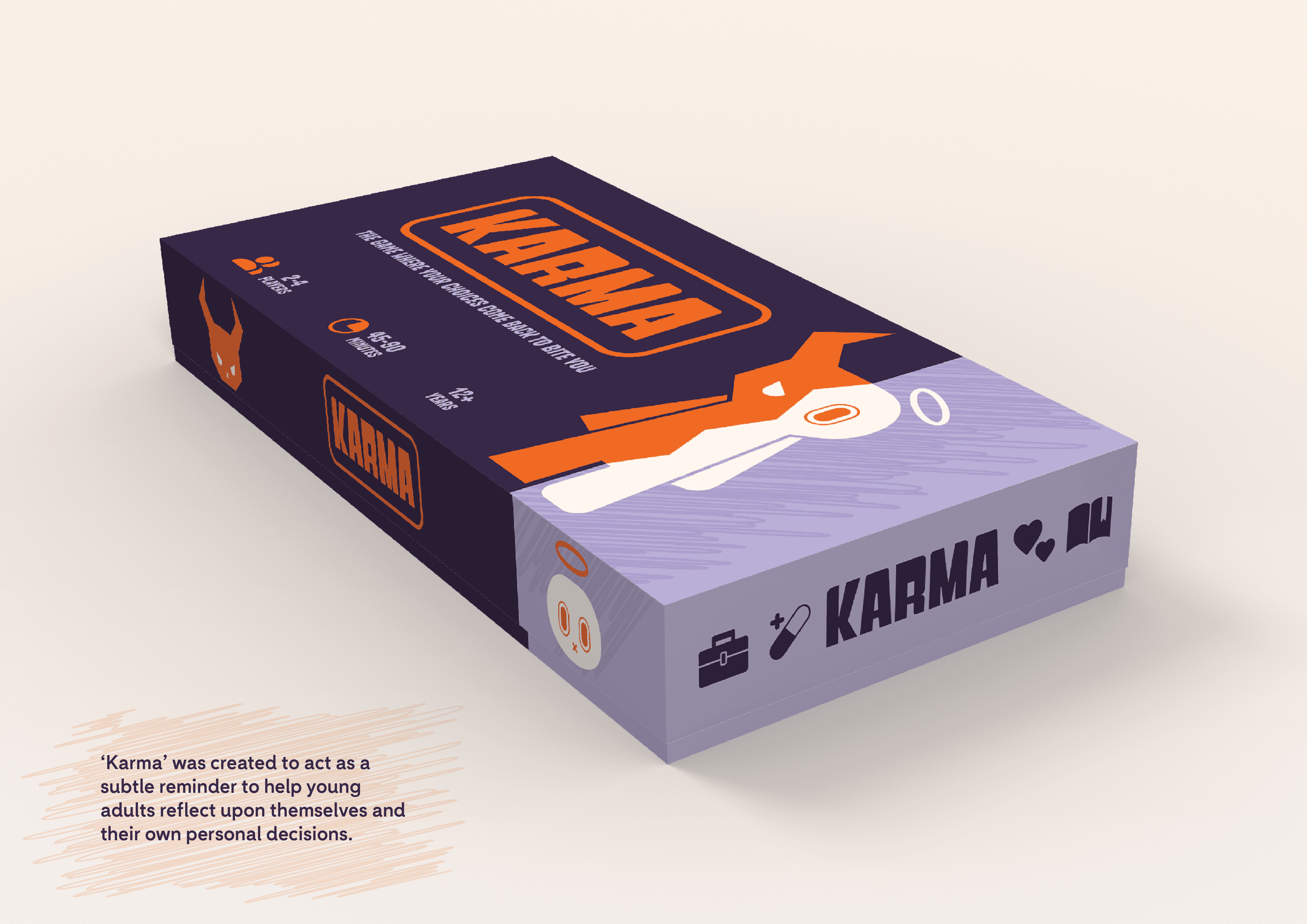
Karma is an strategic board game aimed to help Gen Z with the overwhelming pressures of life and their desire to create a balanced lifestyle. It encourages players to reflect on how they spend their time on different aspects of life such as health, social, career and leisure. The game uses chance based gameplay and resource management to show the trade offs/consequences for neglecting certain aspects of their life.
Year
2025
Team
Lauren Vuetilovoni
Skills
LXD, Game Design, User testing, Game Mechanics, Editorial Design
LXD
GAME
Context

Gen Z desire a more balanced lifestyle, yet many still feel unhappy with the balance they currently have. As work, social life, personal wellbeing and health compete for attention, their idea of balance has become something they value, but struggle to maintain.

Problem

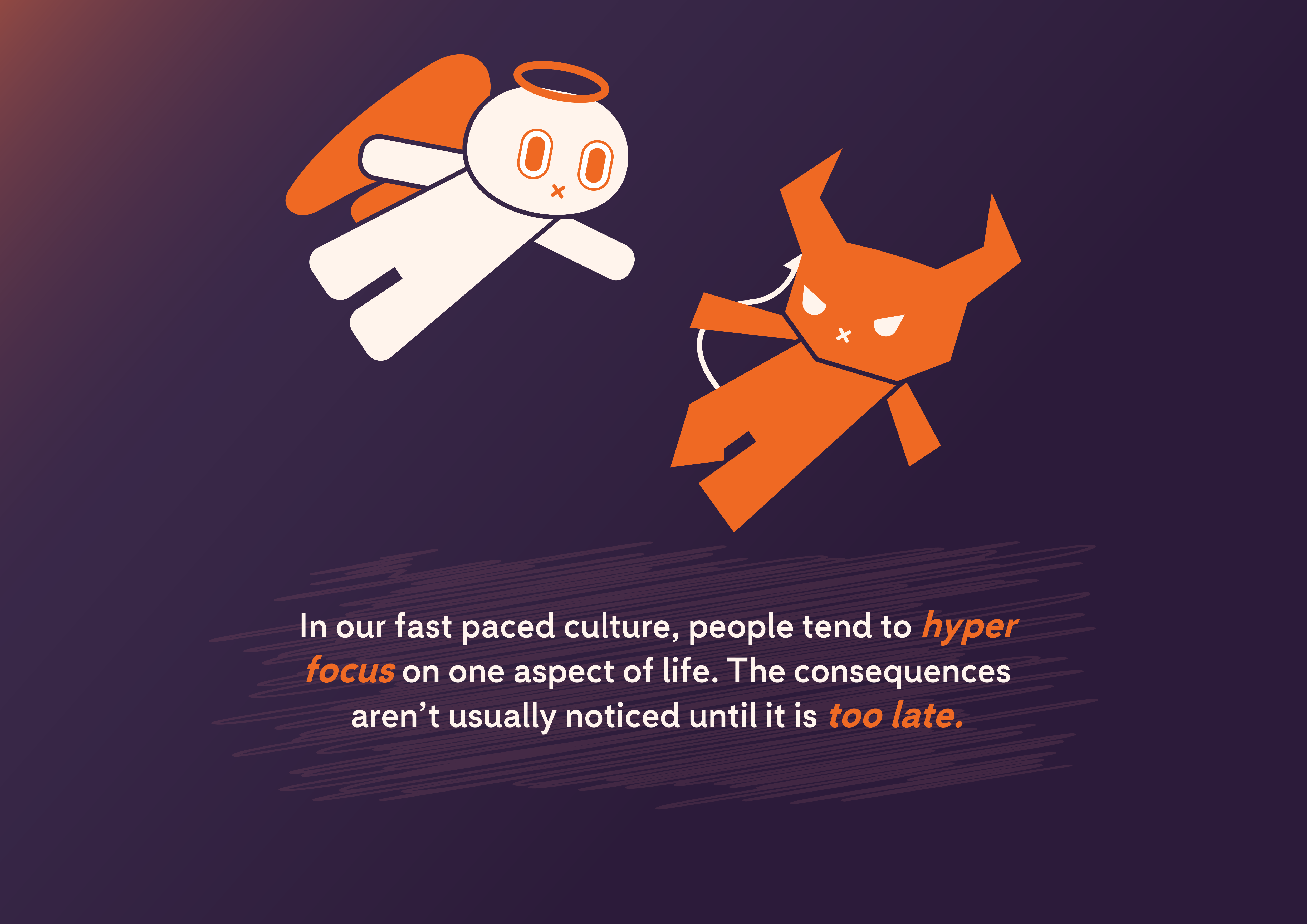
Interviews and resources showed that young adults often hyperfocus on one area of life without fully understanding the trade-offs. By prioritising one aspect of their life, they often din't realise the consequences it creates for other parts until it's too late.
Process

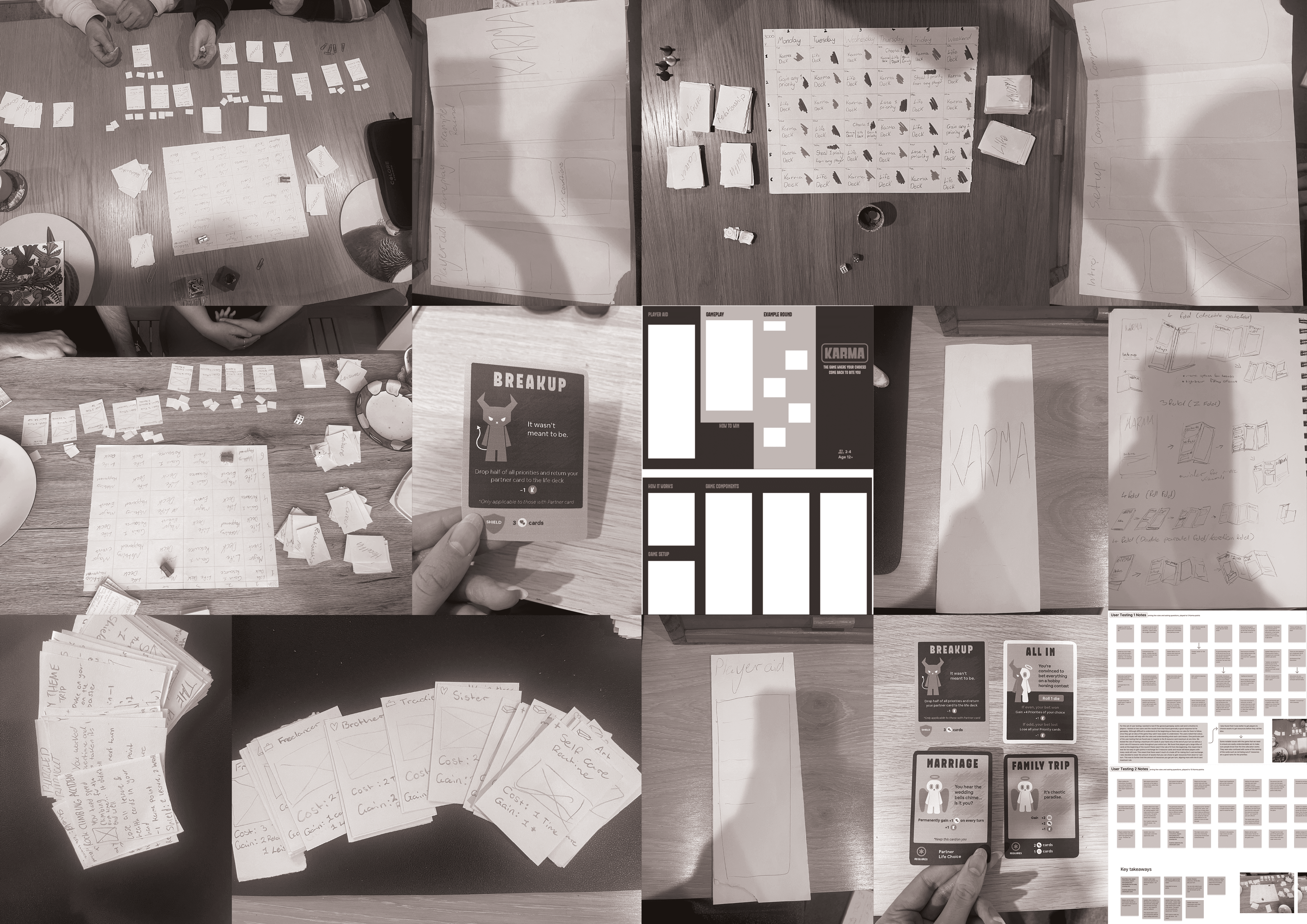
The process of creating the game involved a human centred design approach, testing and working with the target audience to refine the mechanics of the game so that reflection on the choices they made was at the centre of the experience.
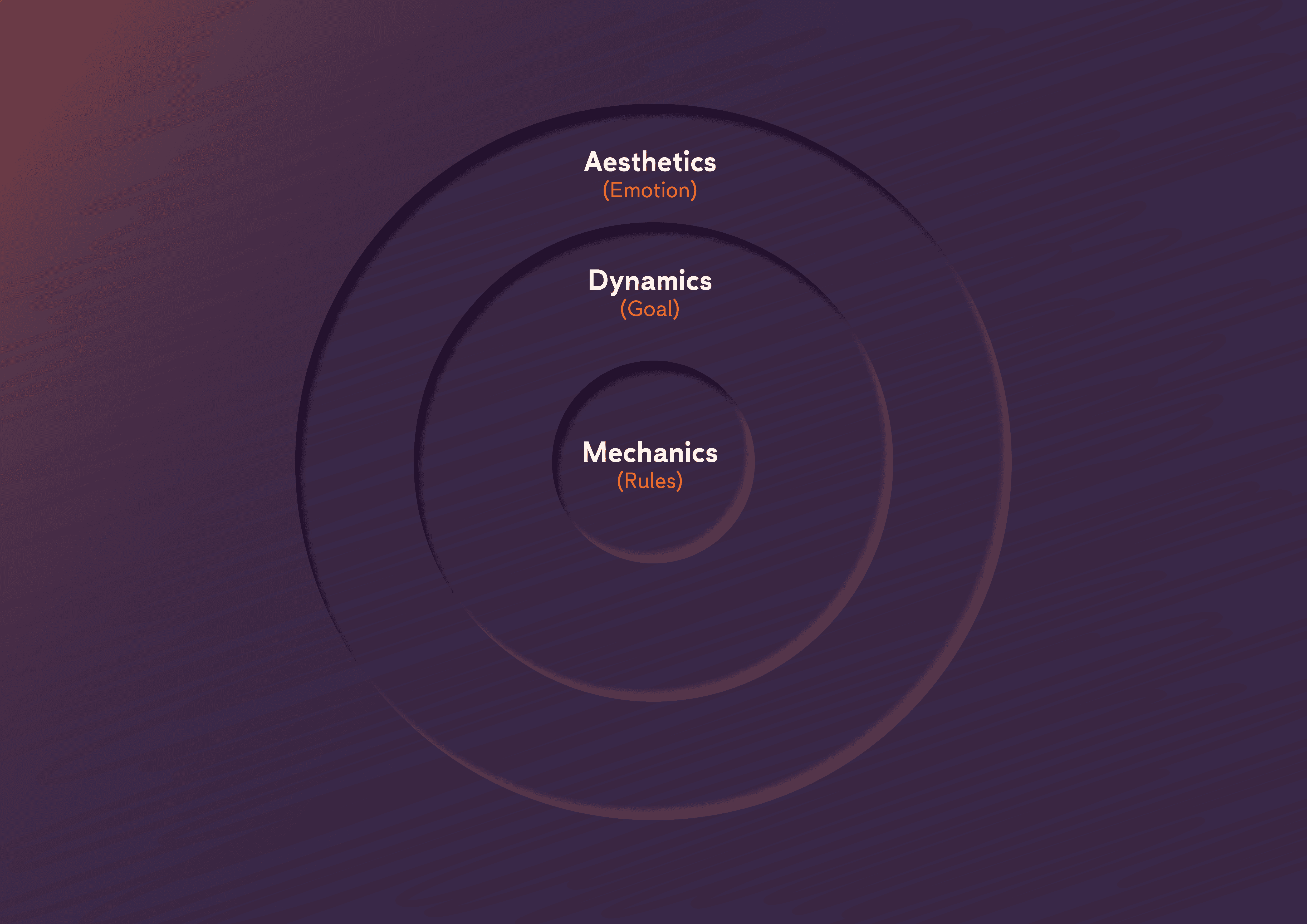
Taking inspiration from the MDA Framework, I was able to shape Karma’s game mechanics into the reflective experience it intended. The framework helped to focus on the emotional outcome of the game (reflection and awareness) first, and from there find specific goals and rules to encourage those emotions throughout the game.
Outcome

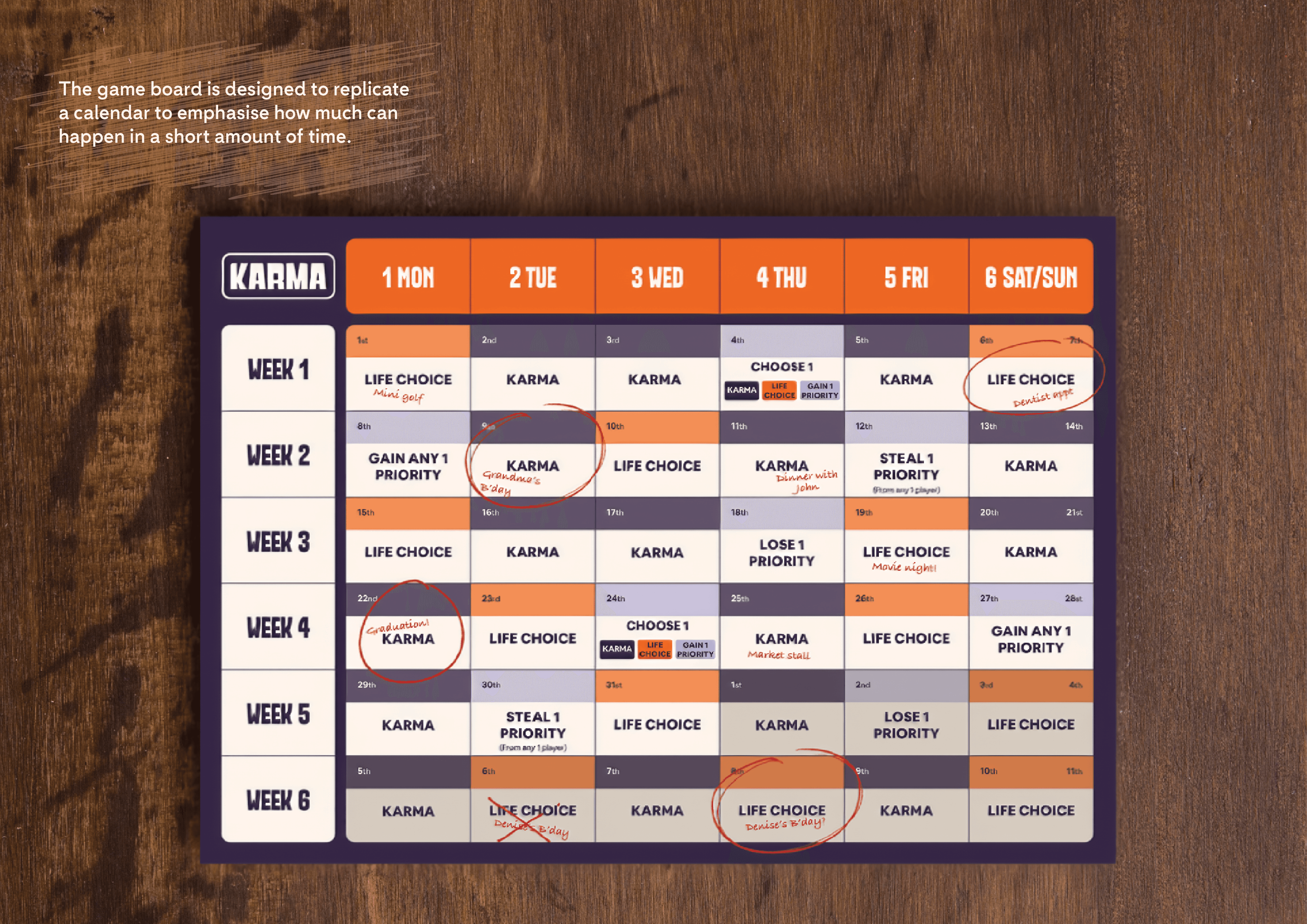
Karma is a board game that turns the pressures of life balance into a fun, yet reflective experience. Players manage the limited time they have to allocate to different aspects of life. The game uses choice and consequence to encourage players to see how focusing too heavily on one area of life can affect everything else.
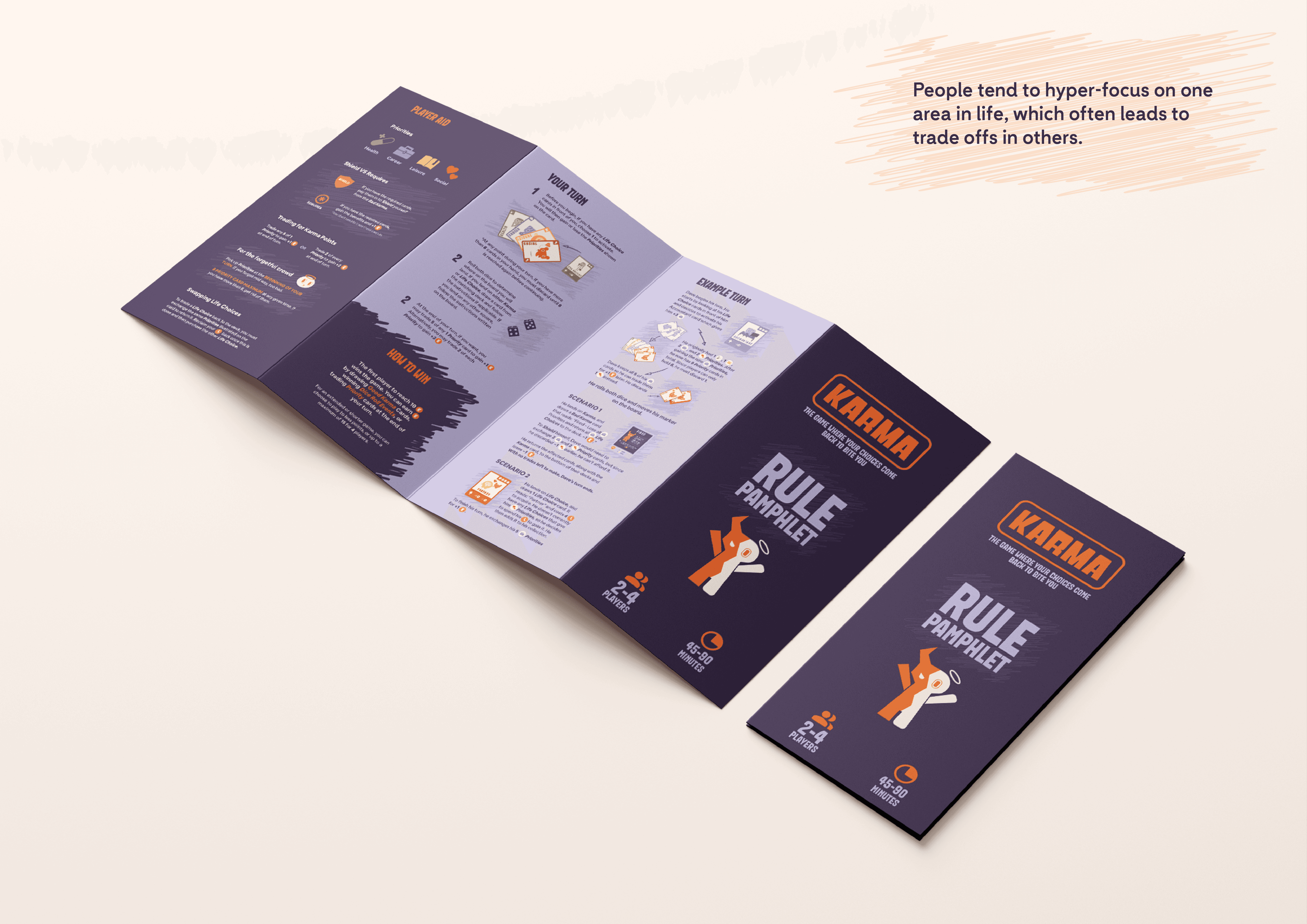
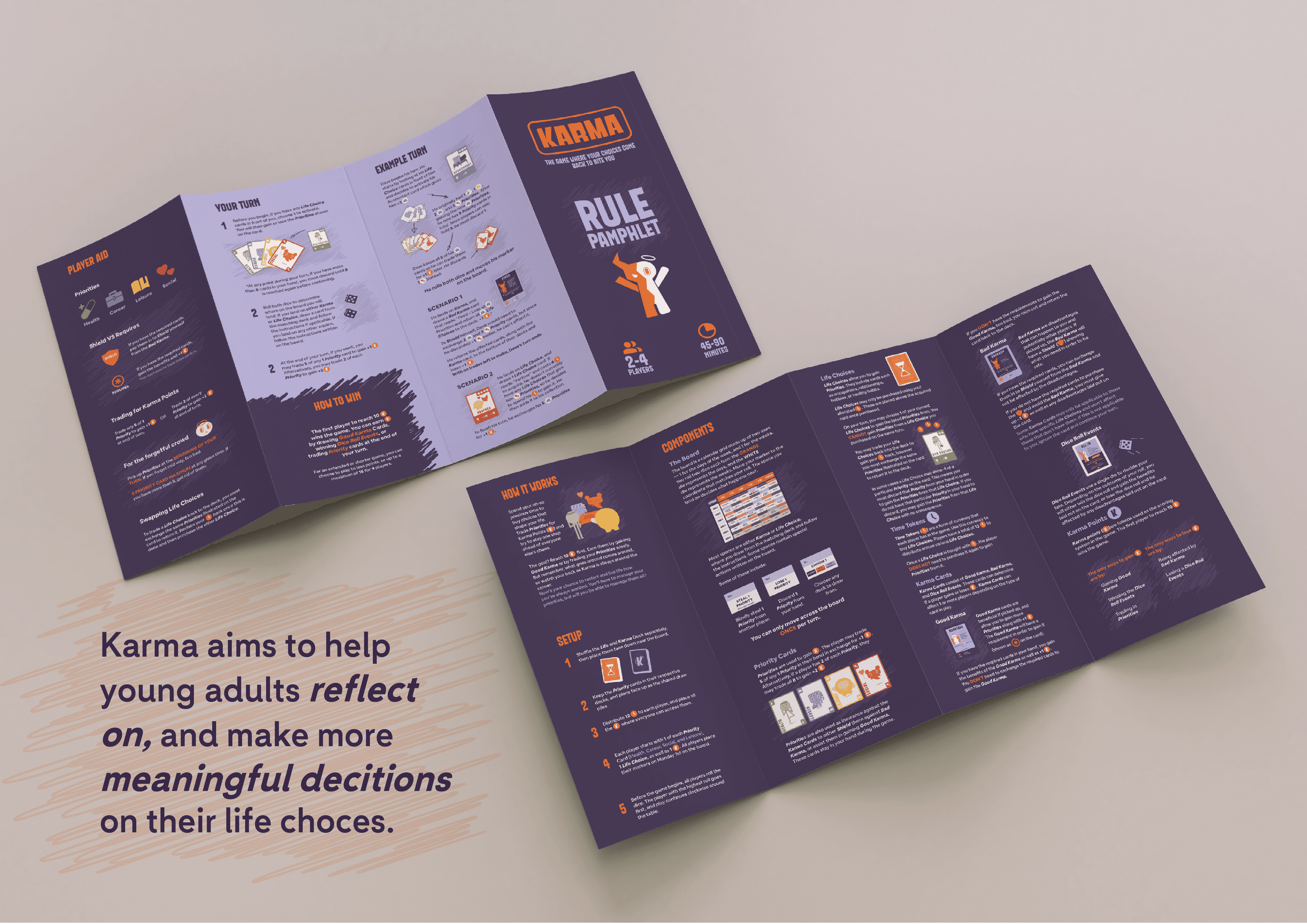
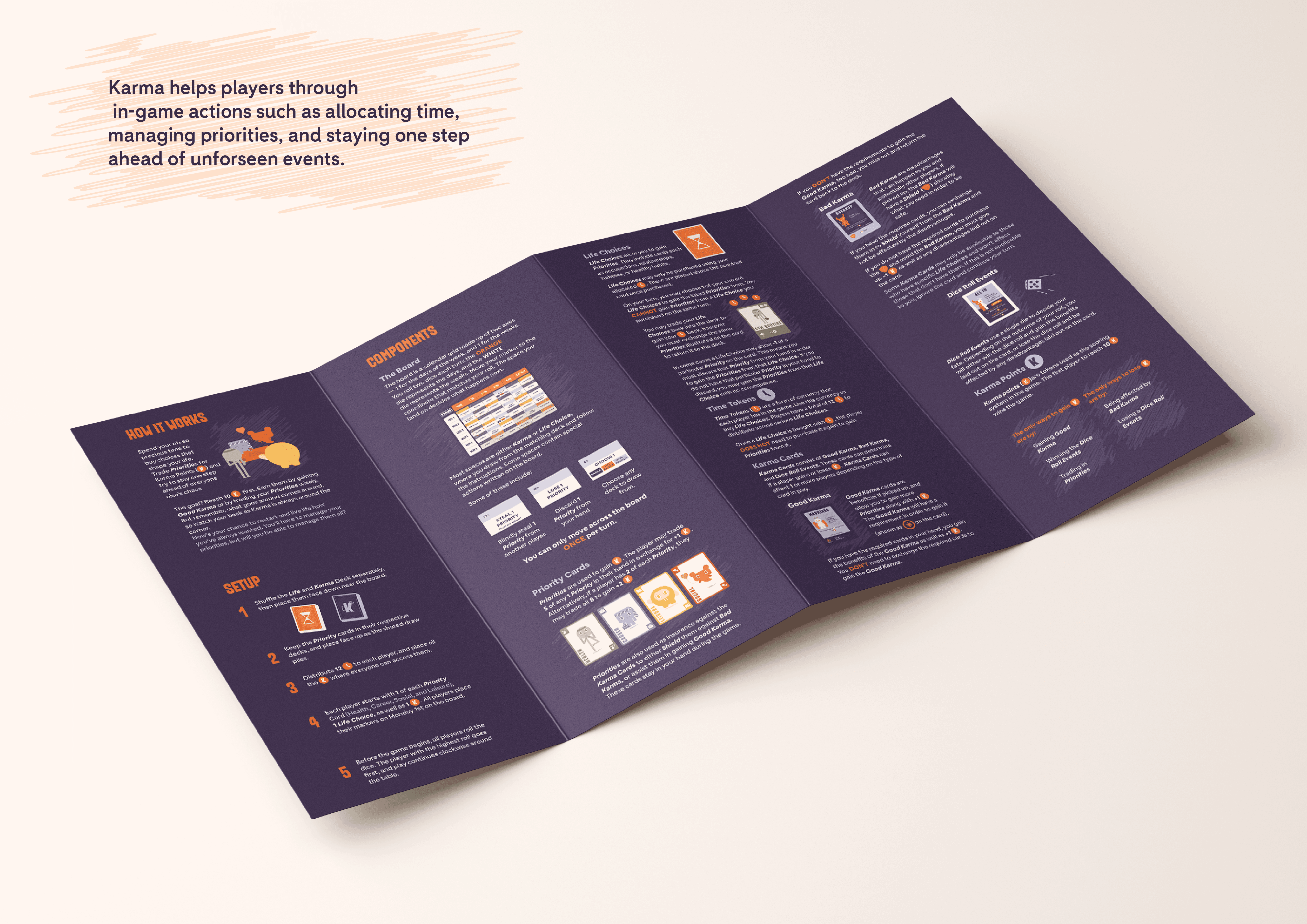
The game manual was designed to be clear and easy to follow, with all rules presented on a single A3 sheet. Its accordion fold lets players focus on one section at a time, making the instructions feel more manageable and less overwhelming.
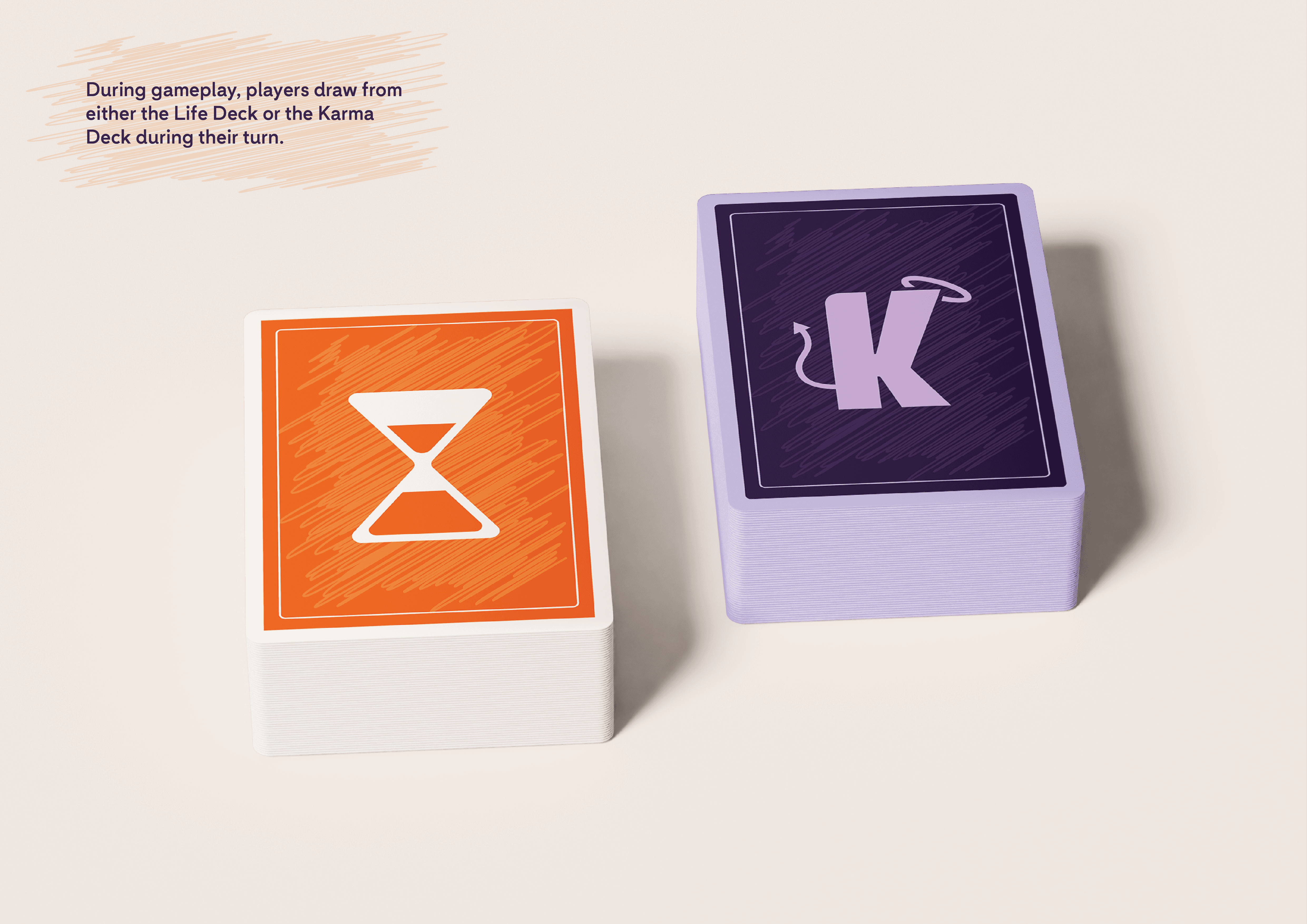
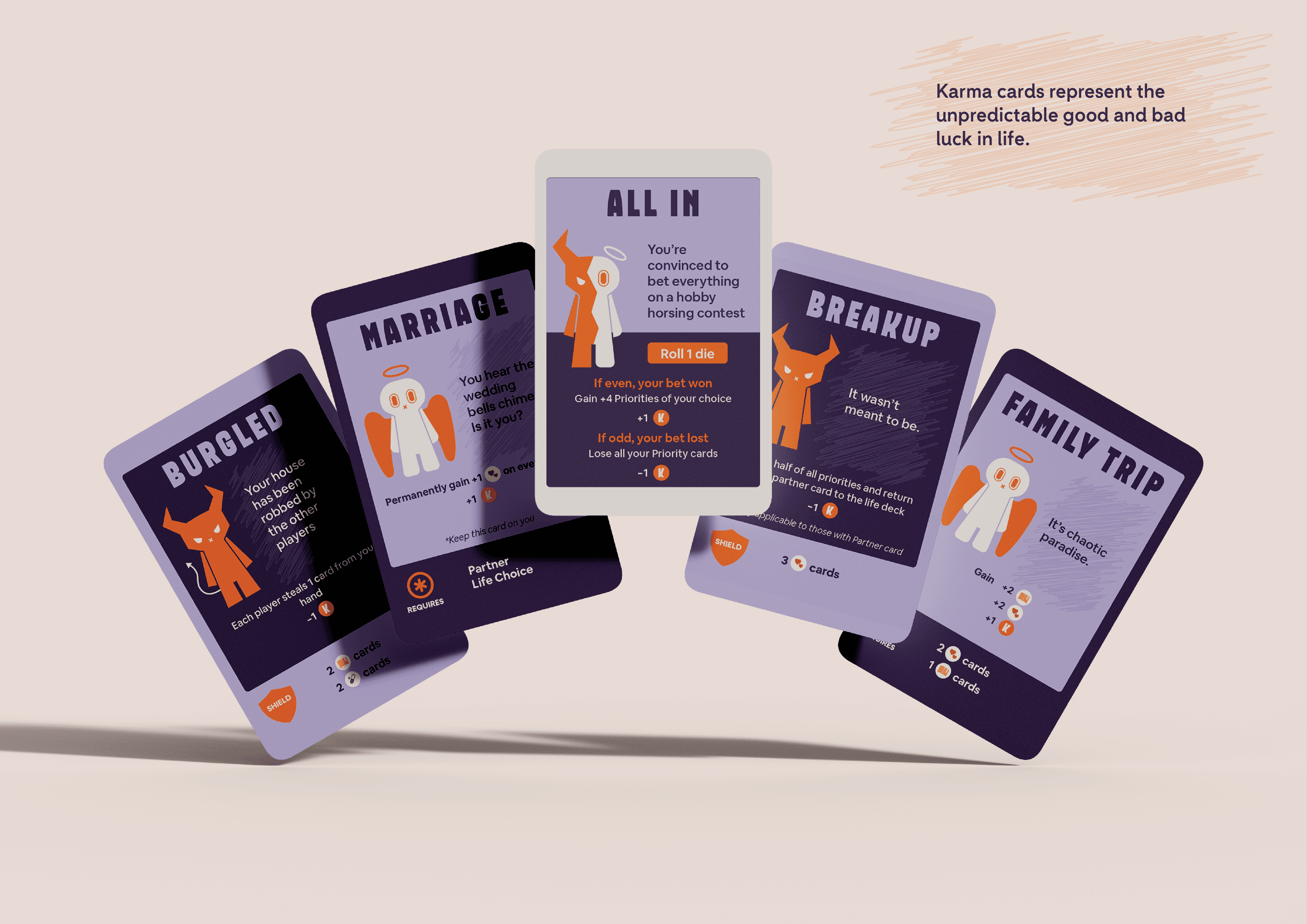
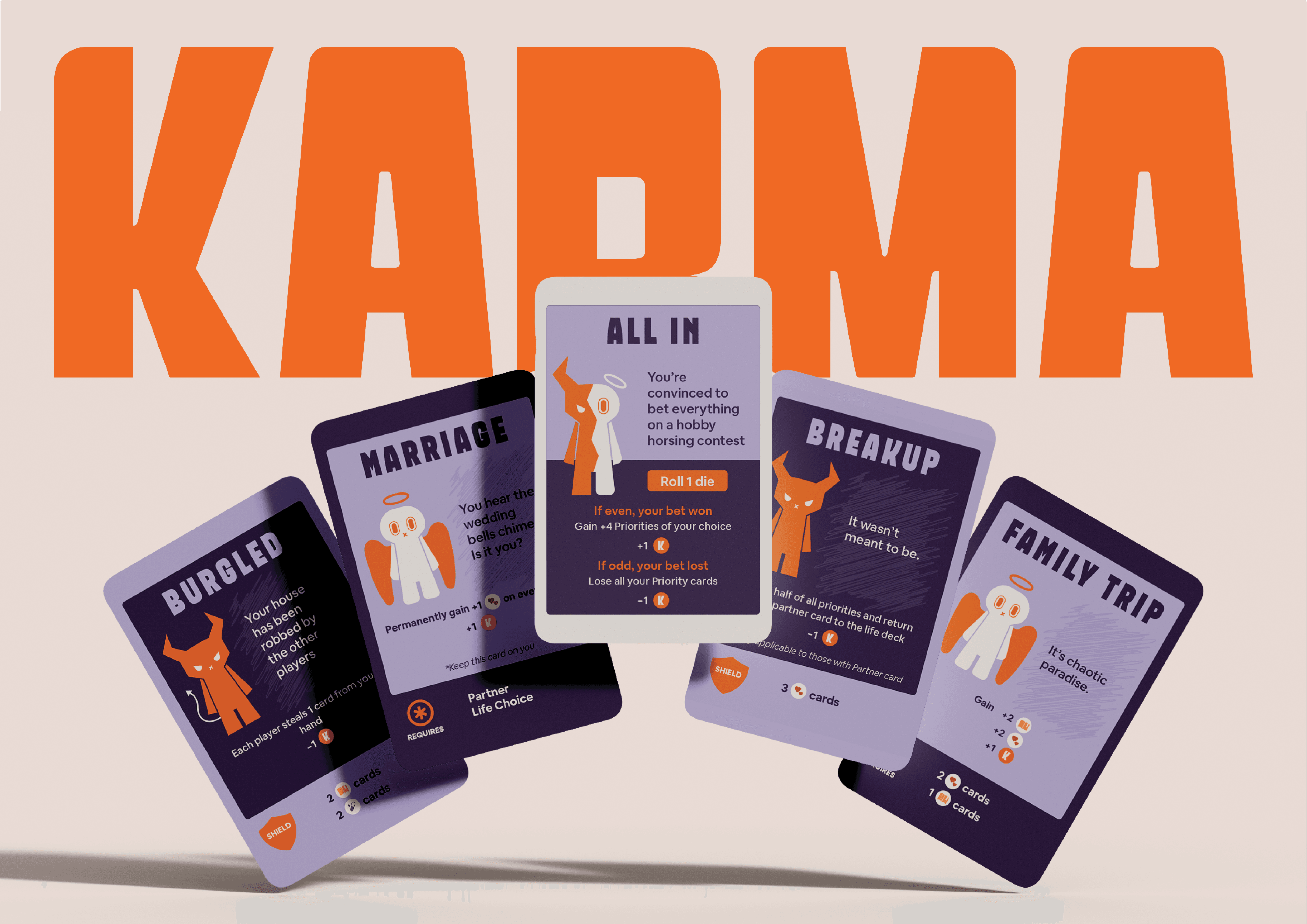
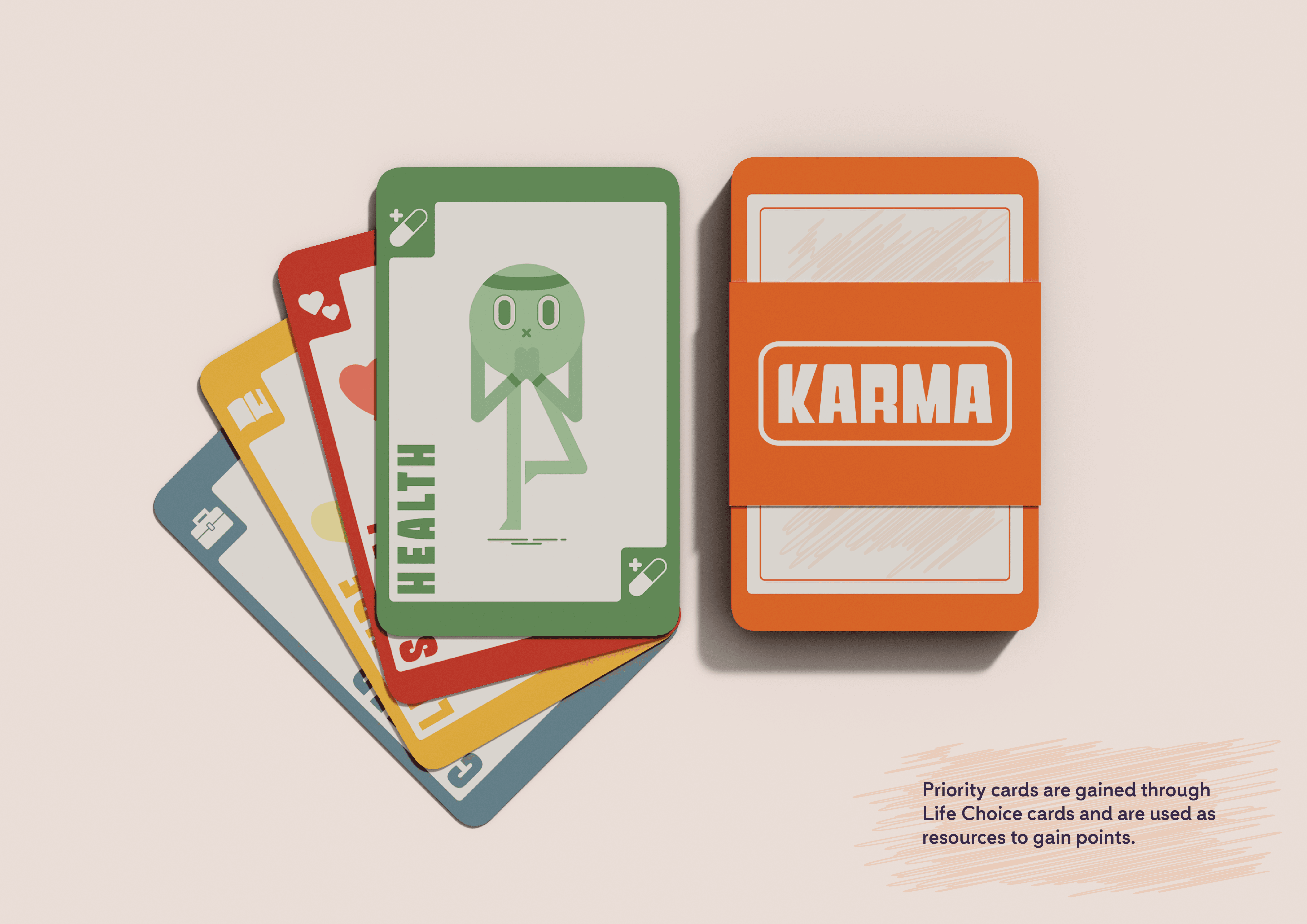
The Karma cards act as unpredictable events within the game. They can either be good or bad depending on the choices you make throughout the game. From these cards, your strategy may change and priorities may shift as you go.
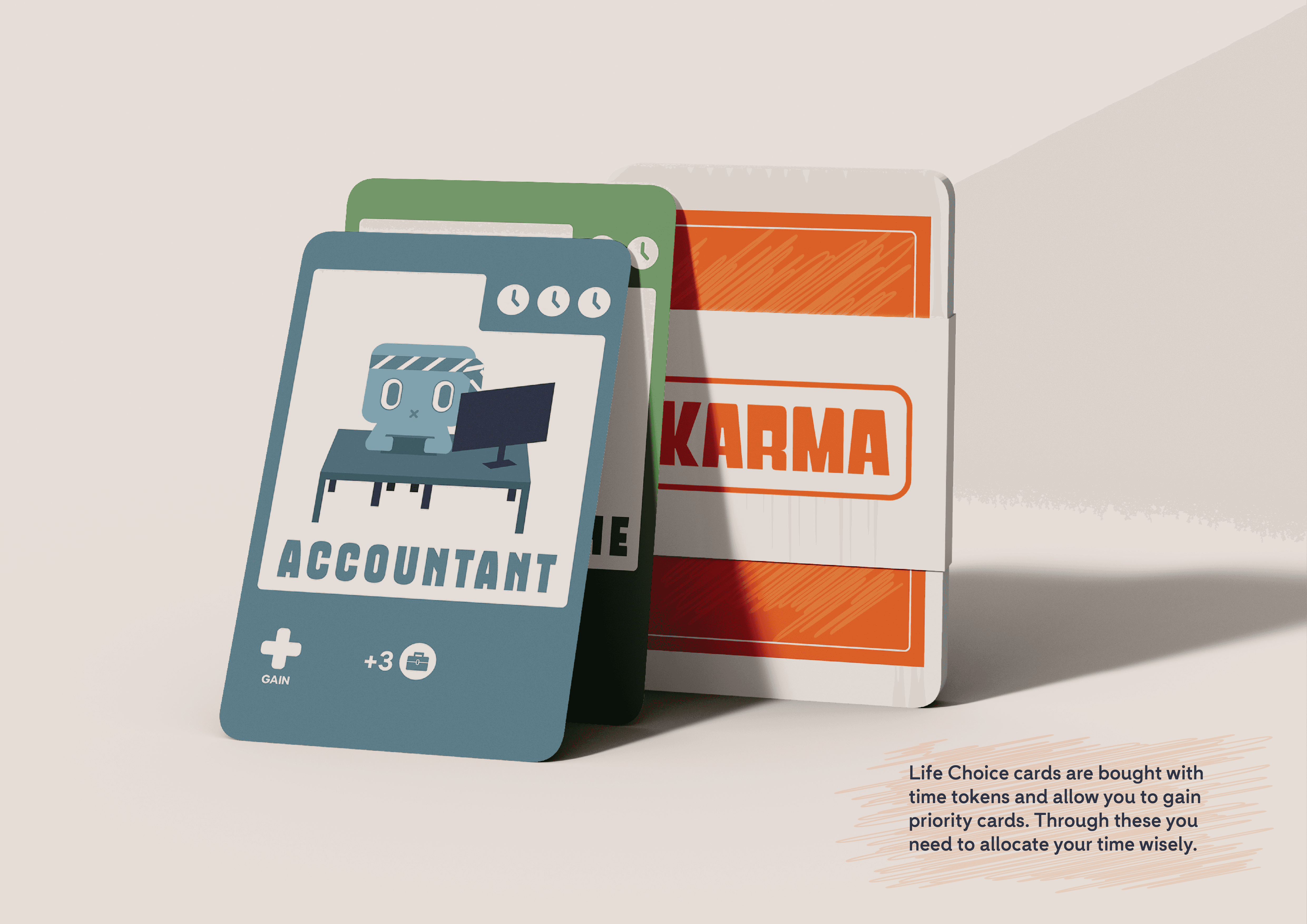
The visual direction of the brand, designed by Lauren used a playful illustration style and distictive colours, aiming to be fun and approachable for gen Z.
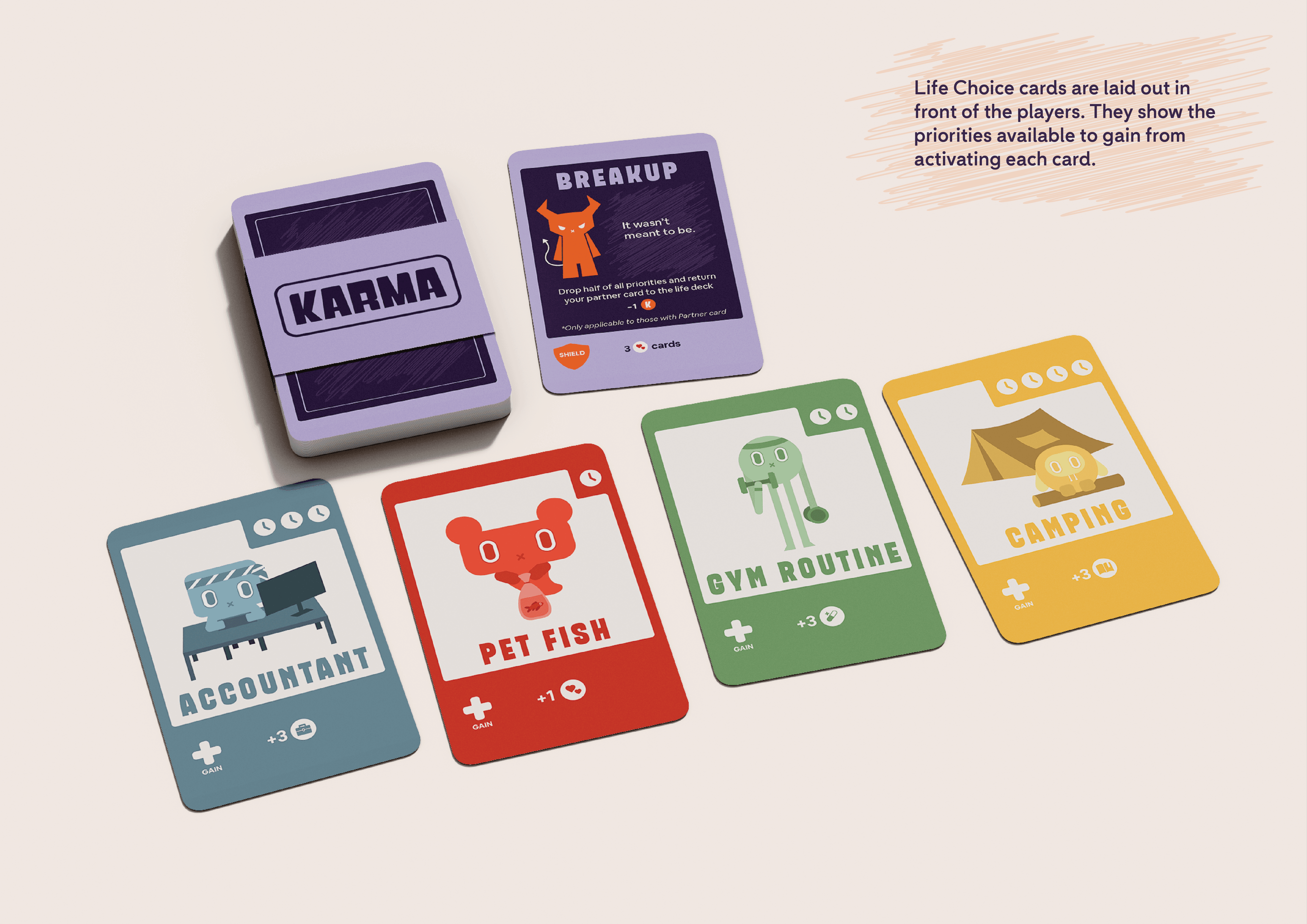
The game uses playful humour to make the otherwise more serious topic feel easier to engage with. Players are encouraged to play how they wish to so they learn the benefits and consequences of their choices for themselves.
Impact

Karma helps young adults reflect on their life choices and where their priorities lie. By turning everyday decisions, whether big or small, into an engaging tabletop game, it helps Gen Z recognise the consequences of hyperfocusing on one part of life or spreading their attention across multiple areas, encouraging players to think more consciously about the trade-offs behind the choices they make.